
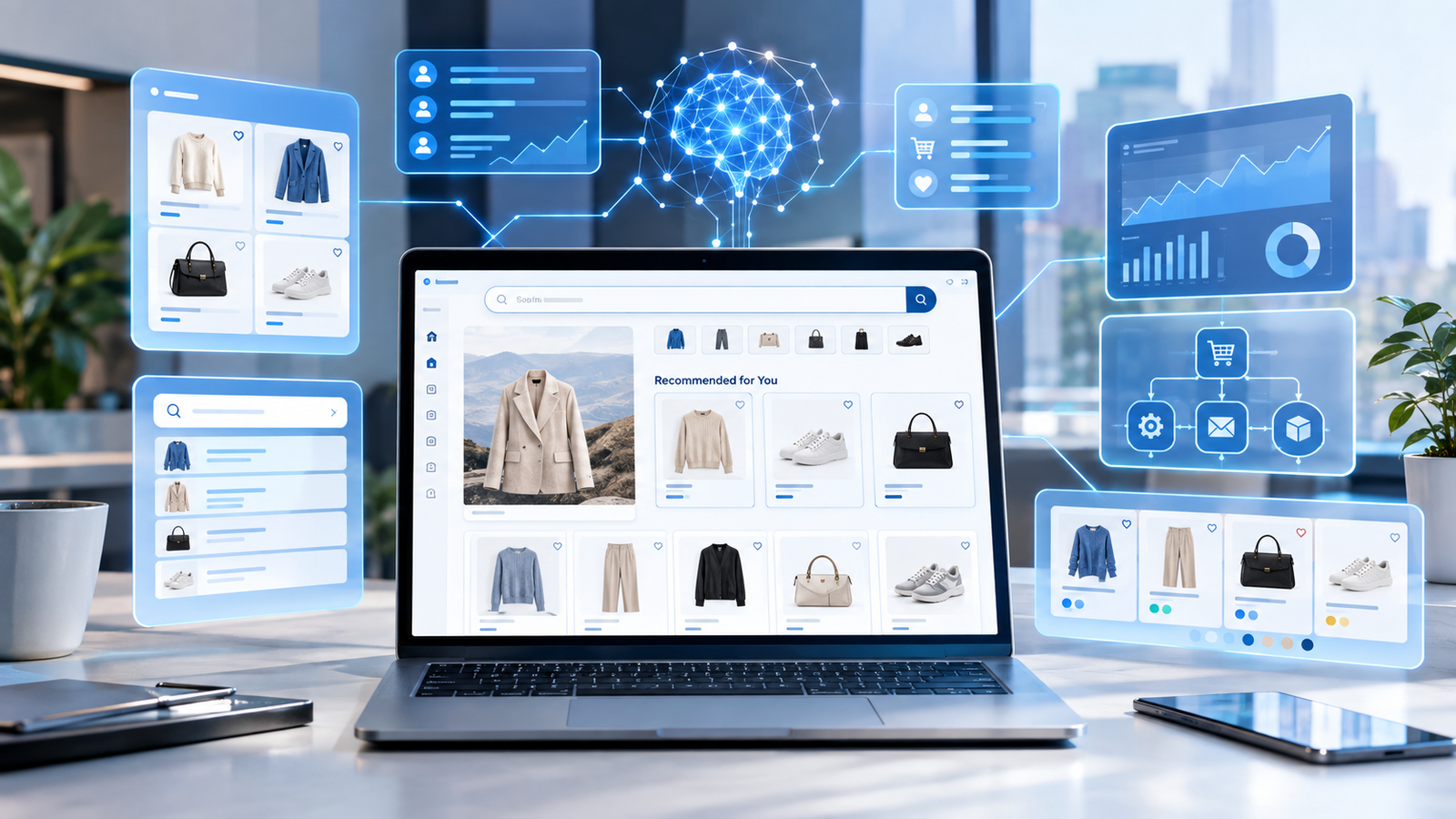
E-commerce has brought about a revolution when it comes to discovering, comparing, and buying products. The customers expect the online store to know what they need without them having to go through thousands of irrelevant products. This is why AI personalization for e-commerce is gaining importance.
By using artificial intelligence, the e-commerce business will be able to understand the behavior and shopping pattern of the customer. It means that the e-commerce business will not offer the same products and offers to all the customers.
The online store will be able to change its content according to the interest of the customer and actions.
What Is AI Personalization for Ecommerce?
Artificial intelligence personalization in ecommerce means the use of artificial intelligence and machine learning technologies to tailor an ecommerce shopping experience for an individual shopper.
Ecommerce websites typically tend to show the same kinds of products, categories, and promotions to all customers visiting the website. However, there is an alternative way of doing it by using information like browsing history, purchase history, search history, and interactions with various products and other preferences of customers.
For instance, a person viewing running shoes many times will get similar footwear, sports clothes, or accessories recommended during the next visit.
The key purpose is not only to show more products but to offer more relevant products.
How AI Personalization Works in Ecommerce
Personalized AI begins with the collection and analysis of customer interaction. Every move that the buyer makes can give valuable insights into the interests of this person.
If the user performs actions like searching for a product, looking at various products, adding some product to the cart, and completing the transaction, an AI technology can use all these interactions to learn more about customer preferences.
Then, machine learning algorithms can recognize certain patterns from large volumes of ecommerce data. They allow businesses to predict what products or pieces of content will be interesting to a specific customer.
For example, an online fashion shop can observe that the buyer often examines formal dresses. The ecommerce website will pay special attention to these dresses, accessories, and collections in the following interactions of the customer.
It is possible to continue such personalized interaction with the customer continuously.
Personalized Product Recommendations
One of the most visible applications of AI in ecommerce is personalized product recommendations.
It is fair to say that almost all prominent e-commerce platforms have at least some recommendation system in place. Besides just promoting popular products, it is possible for AI to look at individual behavior and recommend products that the customer is more likely to be interested in.
Recommendations can be shown on a product page, category page, homepage, cart page, and even post-purchase.
For instance, if the user purchases a laptop, he/she might get recommendations for a laptop case, wireless mouse, keyboard, etc.
It adds value to the user experience since customers get to see more products.
Creating a Personalized Shopping Experience
A successful personalized shopping experience entails more than just product recommendations.
AI technology can be used to personalize many aspects of the customer experience such as the results of the search, content displayed on the homepage, products, promotions, and offers on the ecommerce website.
Consequently, two customers who visit the ecommerce website could encounter different sets of products and recommendations depending on the history of their interaction with the website.
This would make it easier for the large ecommerce websites to provide a seamless user experience. It would not require the customers to go through each of the categories available in the store to find products that match their needs.
AI Personalization and Ecommerce Search
The search function is another place where the role of AI becomes vital.
In the traditional model of an ecommerce search, the keyword-based approach could prevail. If the search phrase used by the customer did not fit the product title exactly, the search result would be unsatisfactory.
An intelligent search based on AI can help to better understand the customer’s intention.
If the customer is looking for “comfortable shoes for everyday walking,” there is no guarantee that he or she will use an exact product title. However, an intelligent ecommerce search system could figure out what was meant by the customer and show relevant products.
This will make product discovery easier and faster.
Benefits of AI Personalization for Ecommerce
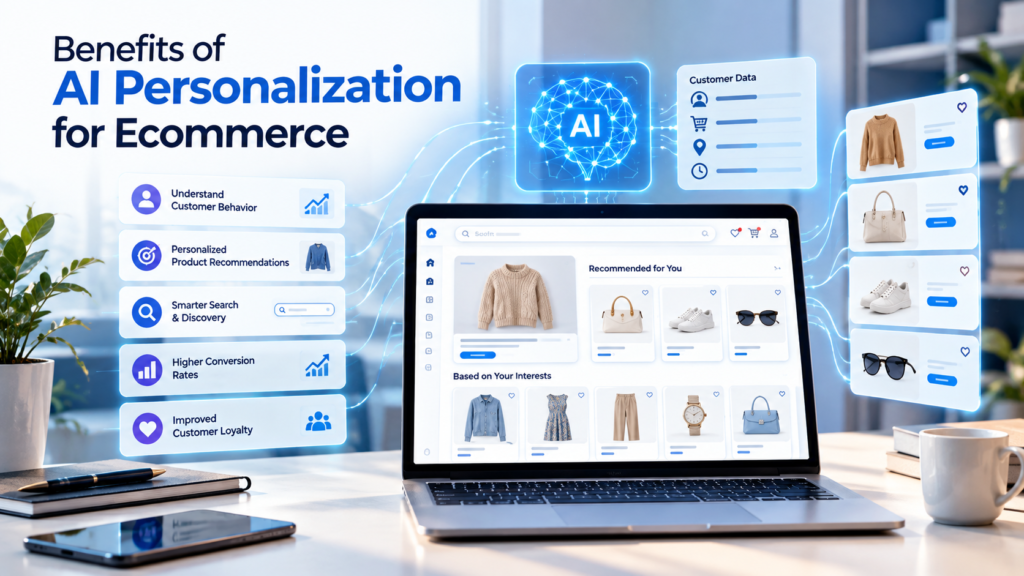
The most important benefit of AI-based personalization is its relevance. The presence of relevant products and content will make browsing online stores easier for customers.
Moreover, personalization can help ecommerce businesses engage more effectively with their customers. The recommendations provided can encourage customers to browse other products rather than leave after checking just one product.
Customer retention can also be achieved through personalization. Customers who get meaningful and helpful recommendations as well as a convenient browsing experience have more reasons to come back.
Finally, AI can be used by ecommerce businesses to handle big catalogues of products. Creating personalized experiences for thousands or even millions of customers manually is challenging.
| Area | Traditional Ecommerce | AI-Powered Ecommerce |
|---|---|---|
| Product recommendations | Mostly general | Behavior-based |
| Search | Keyword focused | Intent and context focused |
| Customer experience | Similar for most users | More individualized |
| Product discovery | Manual browsing | Personalized suggestions |
| Data analysis | Limited automation | Continuous AI analysis |
| Marketing | Broad campaigns | More targeted experiences |
AI Personalization for Online Stores of Different Sizes
AI personalization does not apply only to big ecommerce corporations.
Small and medium-sized online retailers can leverage AI capabilities for enhanced user experience. The degree of personalization can vary based on the amount of data, technologies, and goals that a business has.
For example, a small fashion retailer can use behavior-based AI recommendations based on past views and purchases. A beauty retailer can recommend complementary products based on those items that have been already added to the cart.
With the emergence of AI technologies in ecommerce platforms, it is now possible for any business to implement personalization.
AI and Ecommerce Automation
AI personalization also works closely with ecommerce automation.
Automating the processes of recommending products, segmenting customers, sending emails and reminders for abandoned carts, and other repetitive tasks can be achieved with AI.
In place of developing a unique campaign for each customer individually, AI can assist in determining customer segments and providing more tailored material.
Combining automation and AI allows one to conserve time while concentrating on other aspects of business.
Challenges Businesses Need to Consider
Even though AI-driven personalization has a lot of potential, ecommerce companies have to take a careful approach towards this technology.
First of all, privacy is a crucial issue since personalization relies on customer data. Companies should clearly explain how customer data will be used and meet all existing privacy standards.
The next challenge related to AI-driven personalization is accuracy. If recommendations do not make sense, it can backfire and cause frustration among customers.
Data quality is the other issue that ecommerce companies face. Since personalization relies on machine learning algorithms, the lack of quality data can make recommendations worse.
In this case, AI technologies should complement the ecommerce experience, but not replace good product strategy and customer understanding.
Customer context is vital for delivering a relevant experience, which is crucial when businesses apply AI for smarter decisions.
The Future of AI Personalization in Ecommerce
AI personalization is set to become an even greater trend in ecommerce in the future, as artificial intelligence learns to understand customer intentions and behavior.
In future ecommerce experiences, the process may become more dynamic as well. In addition to simply suggesting products to customers, AI can be used to personalize the whole shopping experience for them, taking into account their needs and behaviors.
Conversational commerce may become one of such trends. Customers will be able to use AI assistants to describe what they need and get personalized product recommendations without looking through numerous categories.
Thus, the whole ecommerce experience will start resembling an interaction with an experienced personal shopper.
Final Thoughts
AI-driven personalization for ecommerce is reinventing the process by which online merchants connect consumers with their products through the analysis of consumer behavior and intent.
From a business perspective, personalization has many advantages besides sales increases. Successful personalization may assist with the improvement of navigation, increased customer engagement, ecommerce automation, and stronger relations with customers.
In light of technological advancements and ongoing development of AI technology, ecommerce companies that recognize the value of responsible personalization are presented with additional possibilities to offer customers relevant and personalized experiences.