
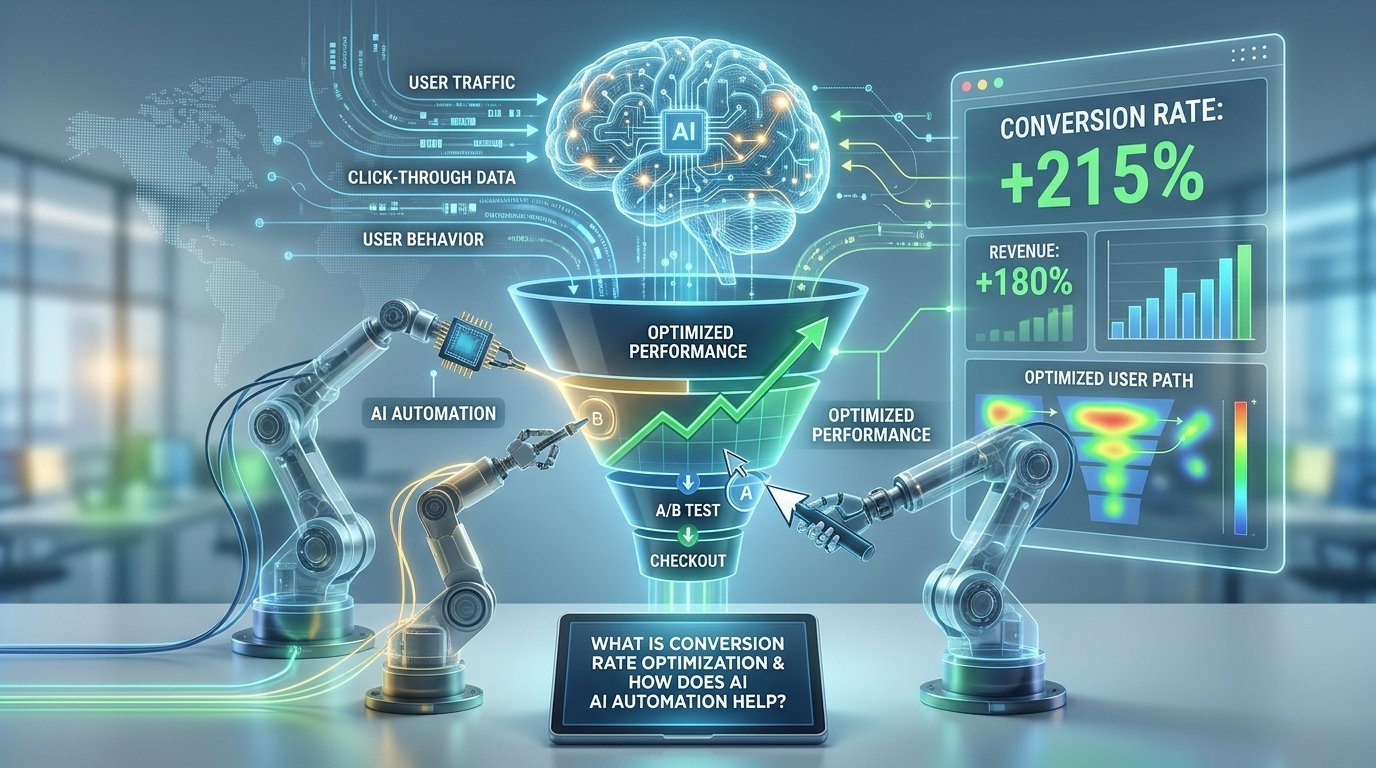
Imagine 1,000 people visit your website this month and 20 of them buy something. That is a 2% conversion rate. Now imagine you change a few things on your site and 30 of those 1,000 visitors buy. You didn’t pay for a single extra visitor, yet you earned 50% more sales.
That is the idea behind conversion rate optimization, or CRO. In this guide, you will learn what it means, how to measure it, and how AI automation can make the work faster.
What Is Conversion Rate Optimization?
Conversion rate optimization is the process of improving your website so a higher share of visitors take the action you want. That action is called a conversion. It depends on your business:
- A store owner wants a purchase.
- A consultant wants a booked call.
- A blogger wants a newsletter signup.
- A software company wants a free trial.
CRO doesn’t focus on getting more traffic. It focuses on getting more value from the traffic you already have.
How to Calculate Your Conversion Rate
The formula is simple:
Conversion rate = (conversions ÷ total visitors) × 100
If your contact page gets 500 visitors and 15 fill out the form, your rate is 3%. Calculate it for each important page, not just your whole site. A site-wide number can hide a weak page that is quietly losing customers.
To track conversions properly, mark your goals in Google Analytics. Google’s own guide to conversions and key events in Google Analytics 4 explains how to flag actions like form submissions or purchases.
Practical Examples of CRO in Action
Theory is easy. Here is what CRO looks like on real pages.
Example 1: A clearer button. A small online shop has a button that says “Submit.” Visitors don’t know what happens next. Changing it to “Get My Free Quote” tells them exactly what they get. Specific wording often works better than generic wording.
Example 2: A shorter form. A service company asks for name, email, phone, company, budget, and address. Many visitors leave halfway. Cutting the form to name, email, and a short message removes friction. You can collect the rest on a follow-up call.
Example 3: A faster page. If your product page takes too long to load on a phone, people leave before they see anything. Compressing large images is one of the simplest fixes, and it costs almost nothing.
Example 4: Visible trust signals. A visitor about to pay wants to feel safe. Adding customer reviews, clear return terms, and familiar payment logos near the checkout button helps reduce hesitation.
Example 5: A simpler checkout. Forcing people to create an account before buying makes some of them give up. Offering guest checkout removes that barrier.
A Simple CRO Process You Can Follow
You don’t need a big team to start. Work through these steps in order.
- Set one goal. Pick a single conversion to improve first.
- Find the leak. Look at your analytics to see where visitors drop off. A page with high traffic and a poor conversion rate is a good place to start. A high bounce rate on that page is another warning sign.
- Learn why. Numbers tell you where the problem is. Watching real visitors tells you why.
- Make one change. Test a single change at a time so you know what caused the result.
- Measure and repeat. Keep the change if it works. If it doesn’t, try something else.
For step three, Microsoft Clarity is a free tool that provides heatmaps and session recordings. You can see where people click, how far they scroll, and where they get stuck.
How Does AI Automation Help With CRO?
Doing all of this by hand takes time. Reviewing data, spotting patterns, and running tests can eat up hours every week. This is where automation helps, as long as you treat it as an assistant and keep a person in charge of the decisions.
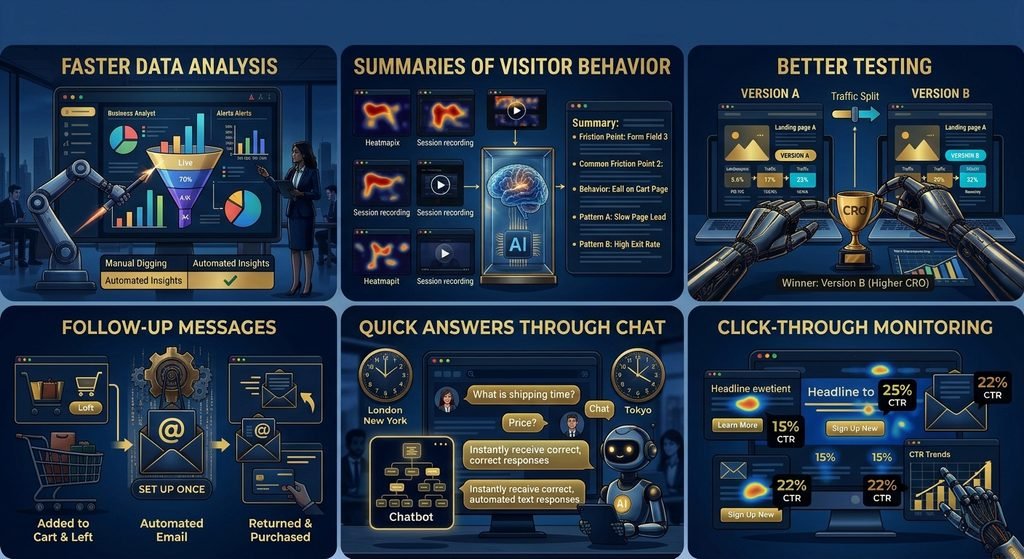
Faster data analysis. Automated reports can pull your numbers every week and flag pages whose conversion rate dropped. You no longer have to dig through dashboards to notice a problem.
Summaries of visitor behavior. Some behavior tools now summarize session recordings and heatmaps for you. Clarity, for instance, offers Copilot summaries that point out common issues, so you can review patterns without watching every recording.
Better testing. A/B testing means showing two versions of a page to different visitors and comparing results. Automated testing tools can split traffic, track the outcome, and tell you when one version is ahead.
Follow-up messages. Say someone adds a product to their cart and leaves. An automated email reminder can bring some of them back. It runs on its own once you set it up.
Quick answers through chat. A chatbot can answer common questions like shipping time or pricing at any hour. Visitors who get answers quickly are less likely to leave.
Click-through monitoring. Your headlines, buttons, and emails all depend on people clicking. Our guide on CTR and website automation shows how automated reporting helps you watch those numbers.
What Automation Cannot Do
Automation can find patterns, but it doesn’t know your customers the way you do. It can suggest that a page needs work. It can’t tell you whether your offer is good or your pricing is fair.
Small sites also need to be careful. A test needs enough visitors to give a reliable result. If your page gets only a handful of visits a week, a “winning” version may just be luck. In that case, focus on fixing obvious problems first, such as speed, clear wording, and a simple form.
Common CRO Mistakes to Avoid
- Changing many things at once. You won’t know which change made the difference.
- Ending a test too early. Give it enough time and traffic before you decide.
- Ignoring mobile visitors. Many people browse on phones, so check how your pages look and work there.
- Copying competitors blindly. What works for another business may not suit your audience.
- Chasing conversions at any cost. Tricking people into clicking hurts trust and brings refunds and complaints.
Frequently Asked Questions
What is a good conversion rate?
It varies widely by industry, traffic source, and offer. Compare your results to your own past performance first, and aim to improve steadily.
How long does CRO take to show results?
Simple fixes like a clearer button can show results within a few weeks. Tests on lower-traffic pages take longer to give reliable answers.
Do I need paid tools to start?
No. Google Analytics and Microsoft Clarity are both free and cover the basics.
Is CRO the same as SEO?
No. SEO brings visitors to your site. CRO helps those visitors take action once they arrive. The two work well together.
Final Thoughts
Conversion rate optimization is about understanding why visitors leave and fixing what gets in their way. Start with one page, one goal, and one change. Use automation to handle the repetitive work, such as reporting, testing, and follow-ups, and keep your own judgment for the decisions that matter. Small, steady improvements add up to real growth over time.