

Blogging can be satisfying. Using autoblogging AI does not take away the need for a clear plan, for content. Keeping a website regularly updated can be tough when research, writing, formatting, optimization, publishing and updates all need hands-on work. This is why autoblogging AI has become a topic that people talk about more and more. By using intelligence with the steps of publishing, businesses and creators can make some parts of the blogging process automatic. They still keep checks where quality and accuracy are very important.
What Is Autoblogging AI?
Autoblogging AI means using intelligence and automation tools to look up topics write draft articles make content better and in some cases post articles automatically. Of doing everything by hand the process links different steps so that an idea can go from being just a thought to a complete article with less repeated work.
Modern AI autoblogging tools might use language models, keyword ideas, formatting templates, content guidelines, connections to content management systems and scheduling options. Some systems can also handle external links, images, buttons that tell people to do something and automatic posting. Arvow for example calls autoblogging software-based blog creation. Points out connections with platforms, like WordPress, Shopify, Wix, Ghost and other content management systems. Read the Arvow autoblogging guide for the complete information.
The important point is that automation does not automatically mean quality. A system can produce content quickly, but a publisher still needs to check facts, search intent, originality, tone, brand consistency, and usefulness before content goes live.
How Does AI Autoblogging Work?
An autoblogging AI workflow normally starts with a topic, a keyword, a content brief or a publishing schedule. The system then searches for information makes an outline writes a draft formats it and prepares the post for a content management system. Depending on the software automatic blog posting can happen away or later according to a schedule.
For publishers looking at autoblogging AI this process can be useful for sites that publish often because repetitive production steps can be done by software. AI blog automation can also help teams keep formatting and cut the time spent moving content, between research, writing, editing and publishing tools.
However the best workflow is not “generate and publish without checking”. A better approach mixes automation with review. AI can do tasks while a human checks important claims, adds expertise improves examples, verifies sources and ensures the article truly answers the readers question.
Key Benefits of AI-Powered Blogging
I find that autoblogging AI brings speed. Traditional blogging needs a lot of time for research, drafting, formatting, optimization and publishing. With autoblogging AI many of these steps become shorter especially if a website uses content formats.
Scalability is another advantage. Small teams may find it hard to keep multiple publishing schedules running. AI blog generators can produce drafts and sort production tasks letting writers and editors concentrate on higher‑value work instead of repetitive formatting.
Consistency is another benefit. When a workflow follows predefined instructions, templates and brand guidelines articles keep a structure. That makes large content libraries easier to manage.
AI content generation also helps idea development. A publisher can use AI to expand a topic into questions supporting terms, outlines and content angles. This is especially useful when building coverage around a subject.
Automation can also link content production with marketing activities. For instance a workflow can prepare an article add links assign a category and schedule publication. This cuts down on administration and creates a more repeatable publishing process.
The Hidden Risks of AI Autoblogging
The biggest risk of autoblogging AI is that the content it produces can be quality and spread out over many pages. Publishing a hundred or two hundred articles does not automatically bring in traffic help the site rank well or build an audience. When the autoblogging AI writes the ideas again and again uses weak research or adds almost nothing new the result is simply a larger library of low value content.
Accuracy is another concern. The autoblogging AI can create statements that sound believable. Are actually incomplete outdated or wrong. This problem is especially dangerous for topics such, as finance, health, legal matters and technology where readers depend on the information that is published.
Search intent can also be missed by the autoblogging AI. The tool may find the keyword but it can still fail to understand what the user really wants. For instance a person searching for a software review is likely looking for a comparison pricing details, limitations, screenshots and real experience, not just a generic description written by the autoblogging AI.
Finally there is a brand risk. Automatic content that uses the tone makes claims that are not supported or publishes material that is not relevant can erode reader trust. For businesses a human review remains essential when most of the workflow is handled by the autoblogging AI.
SEO and Automated Content Creation
Autoblogging AI can help SEO. Automation alone is not an SEO strategy. Search performance still depends on factors such as relevance, helpfulness, site quality, technical accessibility, internal linking, authority and the overall value of the content.
I believe a SEO workflow starts with search intent and topic selection instead of simply producing many AI-generated blog posts. Keywords should be mapped to pages. Related topics should be connected through internal links. Each article should have a purpose.
For Web AI Automation this approach fits naturally with the site’s focus on AI tools, automation, technology and workflow solutions. The site already explains how AI automation combines intelligence, with automated workflows making content automation a relevant extension of its existing topical coverage. Read our guide How AI Automation Works for better understanding about AI automation.
Another useful supporting resource is the site’s guide to AI automation services, which discusses how businesses can use AI, integrations, and workflows to reduce repetitive work.
AI Writing Tools vs. Full Autoblogging Software
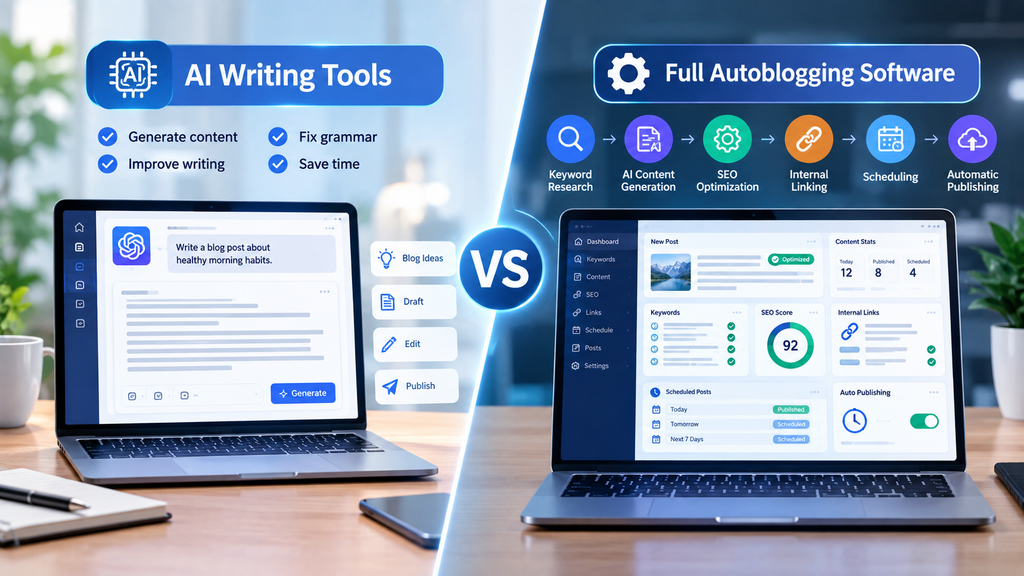
AI writing tools and autoblogging software are not always the same thing. An AI writing tool may focus mainly on generating or improving text. A complete autoblogging platform can connect writing with research, formatting, SEO elements, scheduling, CMS integration, and publishing.
The right choice depends on the publisher’s workflow. Someone who wants to brainstorm and edit manually may only need an AI writing assistant. A content team managing a large website may need broader blog automation tools that connect several production steps.
Before choosing autoblogging software, check how much control it provides. Useful capabilities can include content briefs, keyword controls, editing workflows, internal linking, source handling, publishing permissions, scheduling, revision options, and integrations with the CMS.
How to Use AI Autoblogging Safely
A practical workflow starts with a topic that has been approved by a human and a clear purpose for the search. Then the AI system can help with research organizing the content and writing the draft. The article that comes out of this process should then be checked by an editor before it is published.
Fact-checking should be seen as something that must be done not something that can be skipped. Editors need to check numbers claims about products, names, dates, prices, technical details and other information that might change over time.
Original value is just as important. Add opinions from experts, examples, comparisons, things that were seen firsthand, screenshots, data or special explanations wherever they make sense. These things can turn an AI draft into a real help for readers.
Controls for publishing are also important. Of letting the system publish everything right away companies can use steps to approve content set times for releases or limit how much the system can do on its own. This helps keep things efficient but still, under the control of the editors.
Who Can Benefit From Autoblogging?
Autoblogging AI can be helpful for publishers, affiliate websites, SaaS companies, agencies, ecommerce businesses, media projects and businesses that need educational content. It can also support teams that need to keep a regular publishing schedule without doing every manual production task by hand.
Not every website needs full automation. A smaller site that publishes a high-quality research articles each month might get more value from AI-assisted research and editing than, from completely automatic publishing.
The goal should be to automate tasks that are repeated, not to take away judgment from the content process.
The Future of AI-Powered Blogging
As autoblogging AI keeps improving, AI-powered blogging is expected to blend closely with overall marketing and business processes. Of just creating content on its own future tools might link together research, content planning, SEO tracking, publishing, updates, analytics and workflow automation all in one system.
This doesn’t mean human editors will no longer matter. As machines make it easier to produce content the value of originality, accuracy, expertise and strong editorial judgment could rise. These human qualities may become the things that set good content apart from the rest.
For businesses in the USA, UK and other global markets the chance lies in using automation to publish efficiently while still keeping a high editorial standard. The best systems will probably be the ones that mix fast machine processing, with human oversight.
Final Thoughts
Autoblogging AI can make content production faster more scalable and easier to manage. Autoblogging AI should not be seen as a shortcut to guaranteed rankings. Autoblogging AI works best when Autoblogging AI takes care of tasks while humans keep responsibility, for strategy, accuracy originality and quality.
Whether you use AI blog generators AI writing tools or a broader automation platform the rule applies: automate the process but guard the value of the content. A well‑designed workflow can help publishers produce consistently while giving editors time to focus on tasks that machines cannot reliably replace.
FAQs
Is autoblogging AI good for SEO?
It can support an SEO workflow by reducing repetitive content-production tasks, but automation alone does not guarantee rankings. Quality, relevance, search intent, technical SEO, internal linking, and original value still matter.
Can AI automatically publish blog posts?
Yes, some autoblogging platforms can connect content generation with CMS integrations and scheduled or automatic publishing. However, approval and editorial review are useful safeguards before content goes live.
Is AI-generated content safe for a website?
AI-generated content can be useful when it is reviewed, fact-checked, edited, and improved with genuine value. Publishing large amounts of unchecked material can create quality, accuracy, and trust problems.
What is the difference between AI blogging and autoblogging?
AI blogging can simply mean using artificial intelligence to help write content. Autoblogging generally refers to a broader automated workflow that may include generation, formatting, scheduling, and publishing.
Can autoblogging replace human writers?
It can reduce repetitive writing and production work, but it does not remove the need for human judgment. Editors and subject-matter experts remain valuable for accuracy, originality, context, and quality control.