

Think about the last time you needed a restaurant, a repair service, or a gift. Most likely you picked up your phone and searched. Whatever came up first shaped your opinion before you spoke to anyone.
That is why your online presence matters so much. For a small shop, a freelancer, or a growing company, the way you appear on the internet often decides whether a stranger becomes a customer or scrolls past you.
The good news is that you don’t need a big budget. You need a clear plan, consistency, and a little patience. This guide walks you through each step.
What Is an Online Presence and Why Does It Matter?
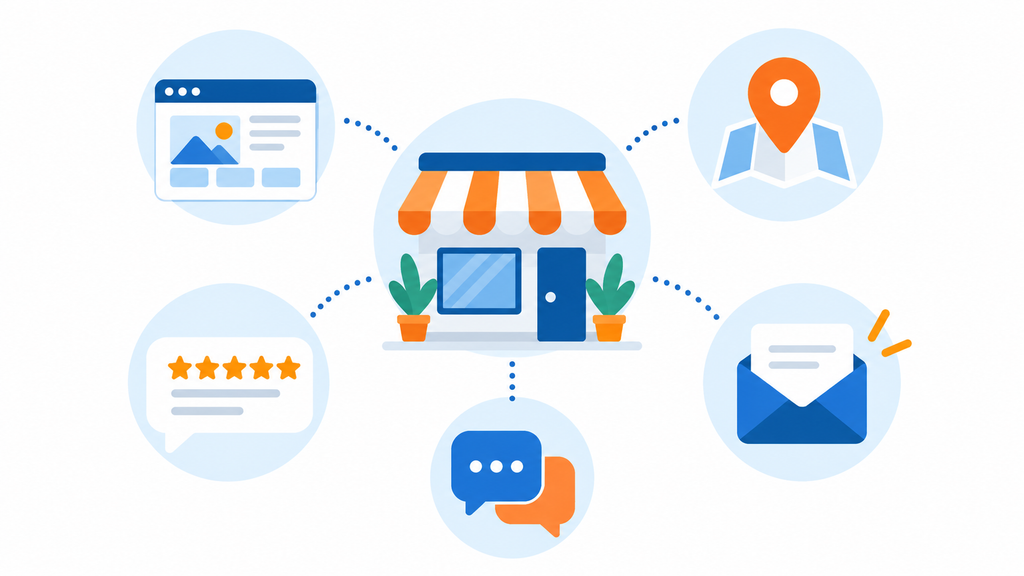
Your online presence is everything people can find about you on the internet. That includes your website, your social media profiles, your Google Business Profile, customer reviews, articles you’ve written, and even mentions of your brand on other sites.
It matters for three simple reasons:
- Discovery: People can’t buy from you if they can’t find you.
- Trust: Before spending money, most people look for signs that a business is real and reliable.
- Convenience: Customers want to check your prices, hours, and services at any time, not just during working hours.
A weak or outdated online presence doesn’t just fail to attract customers. It can push them toward a competitor who looks more professional.
Start With a Clear Goal and a Clear Customer
Many people jump straight into creating a Facebook page or a website without asking two basic questions: What do I want from this? and Who am I trying to reach?
Be specific. “I want more customers” is too vague. Try something like “I want 20 more local clients who need bookkeeping” or “I want to sell handmade candles to buyers across the country.”
Then picture your ideal customer. How old are they? What problem are they trying to solve? Where do they spend time online? A college student looking for a laptop and a business owner looking for an accountant use the internet very differently. Once you know who you’re talking to, every decision gets easier, from the design of your site to the platforms you pick.
Build a Website That Works for Visitors
Your website is the center of your online presence because you fully control it. Social media platforms can change their rules or reduce your reach, but your website stays yours.
A good website doesn’t need to be fancy. It needs to do these things well:
Explain what you do in seconds. A visitor should understand your offer within a few seconds of landing on your homepage. Use a clear headline and simple language.
Load quickly. Slow pages frustrate visitors, and Google has confirmed that page experience is part of how it evaluates sites. Compress large images and avoid unnecessary plugins.
Work well on mobile. A large share of web browsing happens on phones. If your site is hard to use on a small screen, you’ll lose people. Google also primarily uses the mobile version of a page for indexing.
Find where visitors get stuck. Even a good-looking site can confuse people. A simple UX audit can show you which pages or forms are costing you customers.
Make contacting you easy. Put your phone number, email, or contact form where people can see it without searching. Add a clear call to action, such as “Book a free consultation” or “Shop now.”
Show proof. Testimonials, case studies, and real photos of your work help visitors trust you. Avoid stock photos where you can, because real images feel more honest.
Strengthen Your Online Presence With Local and Search Visibility
Having a great website is only half the job. People also need to find it. This is where search engine optimization (SEO) comes in. If your site is brand new, this guide on how to do SEO for a new website covers the basic steps in detail.
SEO simply means making your content easy for search engines to understand and useful for people to read. A few basics go a long way:
- Research what people search for. Free tools like Google Search Console and Google Trends can show you the phrases your audience uses.
- Use those phrases naturally. Write for humans first. Google’s guidance on creating helpful, reliable, people-first content is clear that it rewards content made to benefit people, not pages stuffed with repeated keywords.
- Write clear page titles and descriptions. These are what people see in search results, so make them accurate and appealing.
- Link your pages together. Internal links help visitors and search engines move through your site.
Claim Your Google Business Profile

If you serve customers in a specific area, a Google Business Profile is one of the most useful free tools available. You can follow Google’s official guide to get started with Google Business Profile to set it up. It helps your business appear in Google Search and Maps. Fill it out completely, with your address, opening hours, services, photos, and a short description. Keep the information up to date, especially around holidays. Wrong hours are a quick way to frustrate customers.
Also make sure your business name, address, and phone number are the same everywhere online. Inconsistent details confuse both customers and search engines.
Choose the Right Social Media Platforms
You don’t have to be on every platform. Trying to do so usually leads to burnout and sloppy posting. Pick one or two where your audience actually spends time.
- Facebook works well for local businesses, community groups, and a wide age range.
- Instagram suits visual businesses such as food, fashion, design, and beauty.
- LinkedIn is strong for B2B services, consulting, and professional networking.
- YouTube is excellent for tutorials, product demos, and explaining complex topics.
- TikTok can help reach younger audiences through short, creative videos.
Whichever you choose, treat social media as a conversation, not a billboard. Reply to comments and messages, thank people who share your work, and ask questions. A smaller, engaged audience is worth more than a large one that never interacts.
Post consistently, but be realistic. Three good posts a week that you can maintain beat daily posts you abandon after a month.
Create Content That Actually Helps People
Content is what gives your online presence substance. It is the reason people visit, stay, and return.
Ask yourself what your customers keep asking you. Those questions are your content ideas. A plumber might write about spotting early signs of a leaking pipe. A tutor might share study techniques. A clothing seller might explain how to care for different fabrics.
Helpful content can take many forms:
- Blog articles that answer common questions
- Short videos showing how something works
- Before-and-after photos of your work
- Simple guides or checklists
Aim for honesty and usefulness. Don’t make exaggerated promises or claim results you can’t back up. Readers notice, and so do search engines that prioritize trustworthy sources. Sharing your real experience, knowledge, and results is what separates your content from generic material anyone could copy.
Use Reviews to Build Trust Online
Reviews are a major part of any online presence because they show what real customers think. Many people read reviews before they buy, and a business with no feedback can feel risky.
Here is how to handle them well:
- Ask happy customers to leave a review. A friendly message after a completed job works well. Make it easy by sharing a direct link.
- Never buy or fake reviews. It violates the rules of most platforms and can seriously damage your reputation if discovered.
- Respond to all feedback. Thank people for positive reviews. For negative ones, stay calm, apologize where appropriate, and offer to fix the problem. How you handle criticism publicly says a lot about your business.
Email: A Channel You Own
Social media algorithms change, but an email list belongs to you. Collecting email addresses, with permission, lets you reach interested people directly.
Offer something of real value in exchange for a signup, such as a discount, a helpful guide, or early access to new products. Then send useful updates on a regular schedule. Keep emails short, friendly, and relevant. Always include an easy way to unsubscribe, which is also a legal requirement in many countries.
Keep Your Online Presence Consistent
Consistency makes people remember you. Use the same logo, colors, tone of voice, and basic messaging across your website and social profiles. If your Instagram looks playful but your website reads like a legal document, visitors may feel something is off.
Consistency also means staying active. An abandoned page with a last post from two years ago makes people wonder if you’re still in business. Update your information, refresh old content, and remove anything outdated.
Measure What Works

You can’t improve what you don’t track. Free tools make this easier than ever:
- Google Analytics shows how many people visit your site, where they come from, and which pages they like.
- Google Search Console reveals which searches bring people to you and flags technical problems.
- Built-in social media insights show which posts get the most attention.
Review these numbers once a month. Look for patterns. Which topics get the most engagement? Which pages do visitors leave quickly? Use what you learn to do more of what works and drop what doesn’t.
Common Mistakes to Avoid
Even well-meaning businesses stumble. Watch out for these:
- Being everywhere at once. Focus beats scattered effort.
- Only selling. If every post is an advertisement, people tune out.
- Ignoring messages and comments. Slow replies can cost you customers.
- Copying content from others. It harms trust and can hurt your search performance.
- Expecting overnight results. Growing a real online presence takes months of steady effort, not days.
Final Thoughts
Building a strong online presence isn’t about going viral or spending huge sums on ads. It’s about showing up clearly, honestly, and consistently where your customers are already looking.
Start small. Set a goal, build a simple but solid website, claim your Google Business Profile, pick one or two social platforms, and share content that genuinely helps people. Collect reviews, respond to feedback, and check your results every month.
Over time, these small steps add up. Your name becomes familiar, your reputation grows, and customers begin to find you instead of the other way around.