
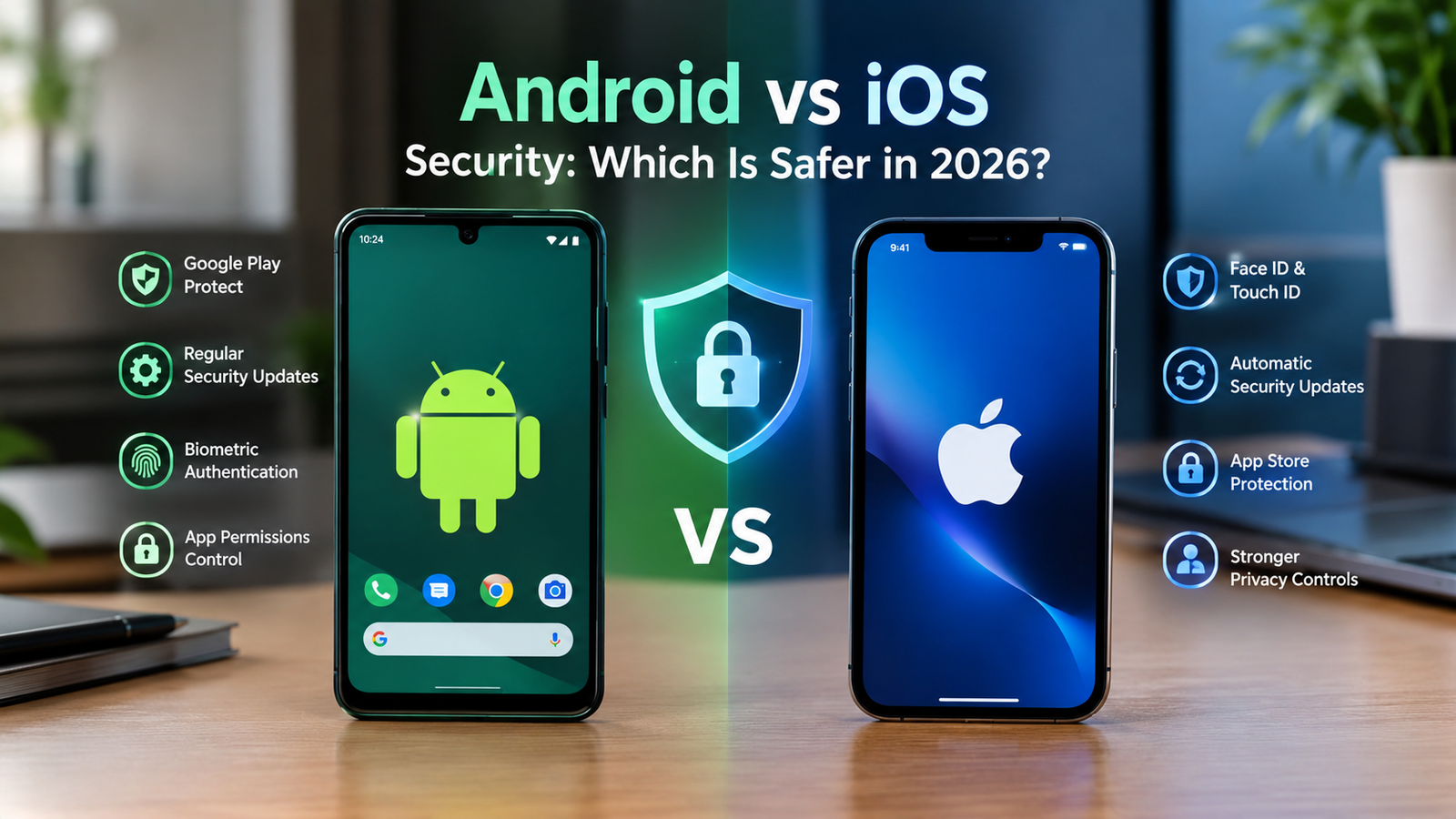
When selecting a phone security is among the primary factors to think about. Your phone is a repository for private messages, images as well as passwords, financial details, security details, work files and also access to important online accounts. This means that the Android vs iOS security debate more pertinent than ever before.
The two platforms Android and iOS utilize modern security technology such as app sandboxing, encryption safe boot, authorization control and hardware-based security. But, they have different methods to protect users.
Android offers users more flexibility and can be used on different devices from various manufacturers. iOS has a more controlled approach using Apple overseeing each part of the OS as well as its hardware.
The question is, which is more safe: Android or iOS?
For the majority of everyday consumers, iOS has an advantage since Apple is the one who controls the software, hardware, and the update process. However an updated Android phone can offer superior security and, in certain instances, greater flexibility for more advanced users.
Android vs iOS Security: Key Differences
The most significant difference is due to the way each operating system is constructed.
Android is built upon the Android Open Source Project (AOSP) and can be used on smartphones manufactured by various manufacturers. Google offers the operating system, and manufacturers can customise Android to fit their specific devices.
iOS is designed exclusively through Apple specifically for their hardware. Apple is the sole control of the operating system and hardware integration, as well as app distribution, and a host of security options.
This provides iOS an improved security settings, while Android gives users greater flexibility and choice of devices.
| Security Feature | Android | iOS |
|---|---|---|
| App sandboxing | Strong | Strong |
| Secure boot | Android Verified Boot | Apple secure boot |
| App distribution | Play Store with optional options | Primarily App Store |
| Security news | Depends on the manufacturer | Direct from Apple |
| Hardware security | Variable by the device | Secure Enclave |
| Customization | High | Limited |
| Variety of devices | Very high | Limited |
| Security coherence | Varies | Generally, consistent |
1. App Security and Sandboxing
The two platforms Android and iOS separate applications from one the other by using the sandboxing feature.
Sandboxing limit what apps is able to access without authorization. For example, a program shouldn’t automatically view your private images microphone, contacts or your locations.
Android has application sandboxing as well as permissions controls. The latest Android versions also offer features like one-time access as well as more control over access.
iOS adopts a similar restrictive approach. Applications operate in restricted environments, and require authorization to access sensitive resources.
The main difference is the consistency. Apple manages its iPhone ecosystem, which means that its security policies are implemented to all iPhones supported more consistently. Android security policies can differ based on the device’s manufacturer, model, and configuration of the software.
Winner for consistency: iOS
2. Security Updates
Security updates are among the most important aspects in the protection of your smartphone.
Google frequently creates Android security updates, however Android devices are made by a variety of manufacturers. Security patches can therefore be delivered to various phones at different times.
Certain large Android manufacturers provide support for long-term and update their devices quickly in comparison to older or cheaper devices might receive updates less regularly.
In iOS, Apple distributes security updates directly to compatible iPhones. This provides Apple more control over when its users are notified of crucial security updates.
For ordinary users this could make an important change. Secure operating systems are less effective if a device is insecure because it hasn’t received an essential patch.
Winner: iOS
But, it doesn’t necessarily mean that every Android phone is not secure. Modern flagship Android phones can come with strong updates policies, which is why buyers should verify the support policy of the manufacturer prior to buying.
3. Malware Protection
Malware is an additional aspect of the Android security comparison. iOS Security comparison.
Android allows applications that are available from Google Play and, depending on the configuration and device users can install applications from different sources. This flexibility is beneficial however, it creates an additional dangers when users install applications from untrusted websites or sources.
Google Play Protect helps scan applications to identify potential dangers.
iOS is a more controlled method of distribution of apps. Apple’s tightly controlled ecosystem makes it harder for users of all levels to install applications that come from unknown sources, which decreases the threat of certain types of malware.
This doesn’t mean that iPhones are safe from malicious attacks or advanced malware. Cybercriminals are able to attack both platforms, especially those with high-value clients using advanced malware or zero-day exploits.
For the typical user, but using a controlled distribution of apps and Apple’s security structure can give iOS an edge.
Winner for normal users: iOS
4. Secure Boot and Device Protection
Secure boot prevents unauthorised software from loading on smartphones when they start.
Android utilizes Android Verified Boot in order to test the authenticity of key components of the system during boot. This safeguards the operating system from unauthorized modifications.
Apple employs a highly controlled boot procedure that begins with hardware-based trust and validates the software components prior to being loaded.
Android provides solid security through secure boot protection, however the method of implementation may differ among makers and devices.
Apple’s control over the iPhone ecosystem permits it to use an identical security model across all hardware supported.
Winner: iOS
5. Hardware-Based Security
Modern smartphones are increasingly equipped with special hardware that protects sensitive data.
The Apple Secure Enclave is a dedicated security device that is designed to guard sensitive biometric and cryptographic keys independent of processing power.
Android devices also have security features that are backed by hardware. For instance, many manufacturers have their own hardware that is secure and secure execution platforms.
The most important thing to remember to note is Android hardware security is more on the particular manufacturer and the device.
A high-end Android phone could offer robust security on the hardware, whereas the cheapest phone might have lower-quality security.
Winner for consistency: iOS
6. Privacy and Permissions
Privacy and security are tightly related, but they’re not exactly the same.
Both platforms offer access control systems that allow users to manage access to data, such as:
- Location
- Camera
- Microphone
- Contacts
- Photos
- Files
- Notifications
Android has become much more effective in managing permissions over the years. Users can limit permissions or often give access to users for a limited time.
iOS also offers precise permission controls as well as privacy indicators that let you know how sensitive hardware, such as cameras or microphones are being used.
The best security is through reviewing permissions instead of approving automatically each request.
No matter if you are using Android or iOS be sure to not grant the application access to confidential information unless you really need it.
7. Cloud Backup Security
Secure smartphones can expose personal data when cloud backups are not properly secured.
Android devices generally utilize Google services to backup their data as well, whereas iPhones make use of Apple’s iCloud.
The security of cloud-based data is dependent on the encryption and account security settings that are available to the user. Passkeys for strong passwords for accounts two-factor authentication and other encryption tools can dramatically increase security.
Apple offers Advanced Data Protection as an optional feature that provides additional end-toend encryption of data stored in iCloud that is compatible. Android users benefit from a variety of encryption and backup security options based on their devices and the services they use.
Cloud security must be analyzed in isolation from any security issues with the OS itself.
8. Android’s Biggest Security Advantage: Flexibility
The openness of Android is usually portrayed as a flaw, however it could be a positive thing.
Advanced users can tweak Android to control sources for applications alter system behavior and, in some instances, install other operating systems.
This gives you greater control over privacy and security.
For instance, experienced users can choose devices with robust update policies and set them up in accordance with their particular security needs.
The drawback is that more freedom opens up more possibilities to make mistakes. Installing software from unreliable sources, enabling security safeguards, releasing the bootloader without need or putting off updates could increase the risk.
Thus, Android’s flexibility could be a security advantage or a security risk based on how the device’s set up.
9. Which Is Safer for Everyday Users?
For the majority of people, iOS is the more secure option.
Apple’s control over software and hardware ensures a consistent security system. Updates are directly distributed through Apple and the entire application environment is tightly controlled and security features that are backed by hardware are built within the system.
But this does not necessarily make Android unsafe.
A recent Google Pixel, Samsung Galaxy or any other supported Android phone can offer excellent security. The most important thing is to select an Android phone that receives regular security updates, and ensuring that updates are in place.
Your actions also matter. If you don’t keep up with security updates and installs untrusted apps can compromise an extremely secured phone.
Android vs iOS Security: Which Should You Choose?
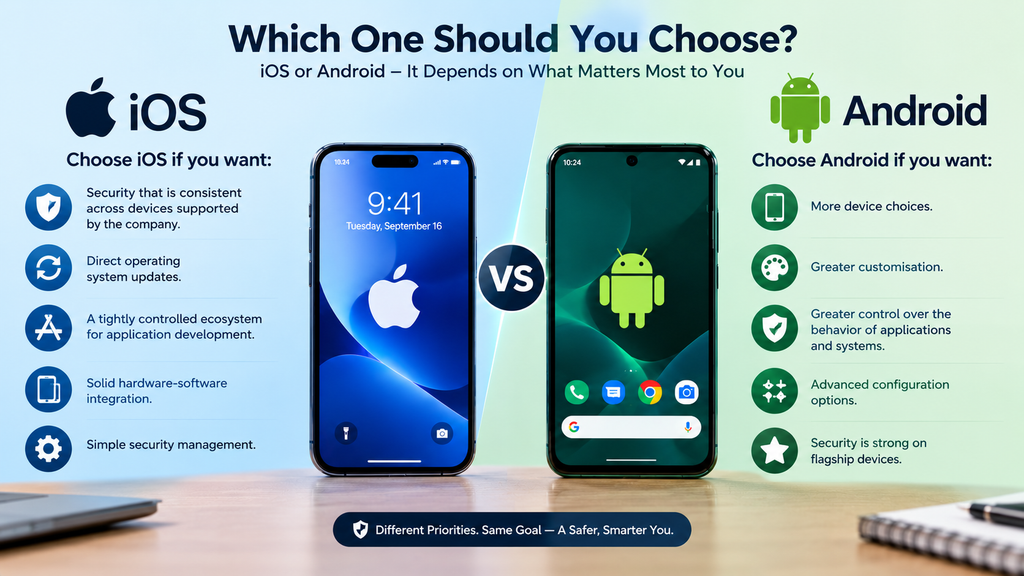
The answer is contingent on what you need.
Select iOS for the following features if you’re looking for:
- Security that is consistent across devices supported by the company.
- Direct operating system updates
- A tightly controlled ecosystem for application development
- Solid hardware-software integration
- Simple security management
Select Android for the following features if you’re looking for:
- More device choices
- Greater customisation
- Greater control over the behavior of applications and systems
- Advanced configuration options
- Security is strong on flagship devices
Security is the top priority, and you’re seeking the minimum amount of configurations, iOS is generally the more straightforward option.
If you are aware of the security features of smartphones and are looking for to have more control Android could be an great choice.
How to Make Android or iOS More Secure
Whatever your operating system make sure you follow these security practices:
- Update your security quickly.
- Make sure you use a strong password or passcode.
- Allow biometric authentication when is appropriate.
- Switch on two-factor authentication on important accounts.
- Make use of a password manager as well as distinct passwords.
- Download apps from reputable sources.
- Examine application permissions frequently.
- Beware of suspicious links and unintentional attachments.
- Make sure your device has encryption and security features on.
- Back up important data securely.
Maintaining your operating system up-to-date is essential. If you own an iPhone and would like a quick tutorial, read this comprehensive guide for the latest version of iOS 26 from WebAI Automation.
Android vs iOS Security: Final Verdict
It is clear that the Android against iOS security issue is not an easy answer since both platforms employ advanced security technology.
For the common person, iOS has the overall advantage of security consistency. Apple’s control over software, hardware updates, application distribution helps reduce the risk of fragmentation and makes security simpler to manage.
Android is, however, improved significantly and is highly safe when used with the most modern and well-supported devices. Its versatility also allows advanced users greater ability to control their own security.
The most secure smartphone is not just the one that has the most secure security design. It’s the phone that is updated with the latest security features and is used in a responsible manner.
Whichever you pick, Android or iOS and how you keep your device up to date, protecting your accounts by using strong authentication, and staying away from malicious apps can have a significant impact on the security of your phone in real-time.
Frequently Asked Questions
Are Android more secure than iOS safer?
For the majority of consumers, iOS is generally considered the most reliable security option since Apple is the one who controls hardware software updates, as well as the apps. However, the latest Android phones made by well-supported companies can also offer excellent security.
Is Android more secure than iPhone?
Android’s greater range of devices and its greater flexibility can result in more security options. But, a completely up-to-date Android phone running trusted apps is extremely safe. iPhones are also the target of sophisticated malware, which means that neither device is secure.
Is iOS more secure than Android in banking?
Both platforms offer strong security to mobile banks. The most important aspects are keeping your operating system and app for banking up-to-date, using secure security, and avoiding links that are suspicious and safeguarding the security of your Apple and Google account.
Is it true that Android offer better security features than iOS?
The two platforms are not necessarily superior for every privacy issue. Android allows for more customization and control, whereas iOS offers robust privacy protections within Apple’s tightly controlled ecosystem. The settings you make, the applications you use and account settings also impact your privacy.
Do I need to switch to Android to iPhone for greater security?
Not necessarily. When your Android phone is receiving regular security updates and you adhere to the best security practices changing platforms might not be required. But, iOS can be a more suitable option if you want an environment with more security controls with little configuration.
Which is better against malware? Android or iOS?
For the majority of people, iOS has an advantage because the Apple-controlled application ecosystem can make popular malware distribution methods difficult. Android is also a great option for protecting against malware specifically when users download apps from reputable sources and ensure that their devices are up-to-date.
Which is your most crucial safety feature on smartphones?
Regular updates to security patches is among the significant elements. A device equipped with solid security features can be vulnerable if it does not receives critical security patches. Secure authentication and secure use of applications are equally important.